The Quiet Expiry: How Contractual Calendars Decide Which Claims Survive
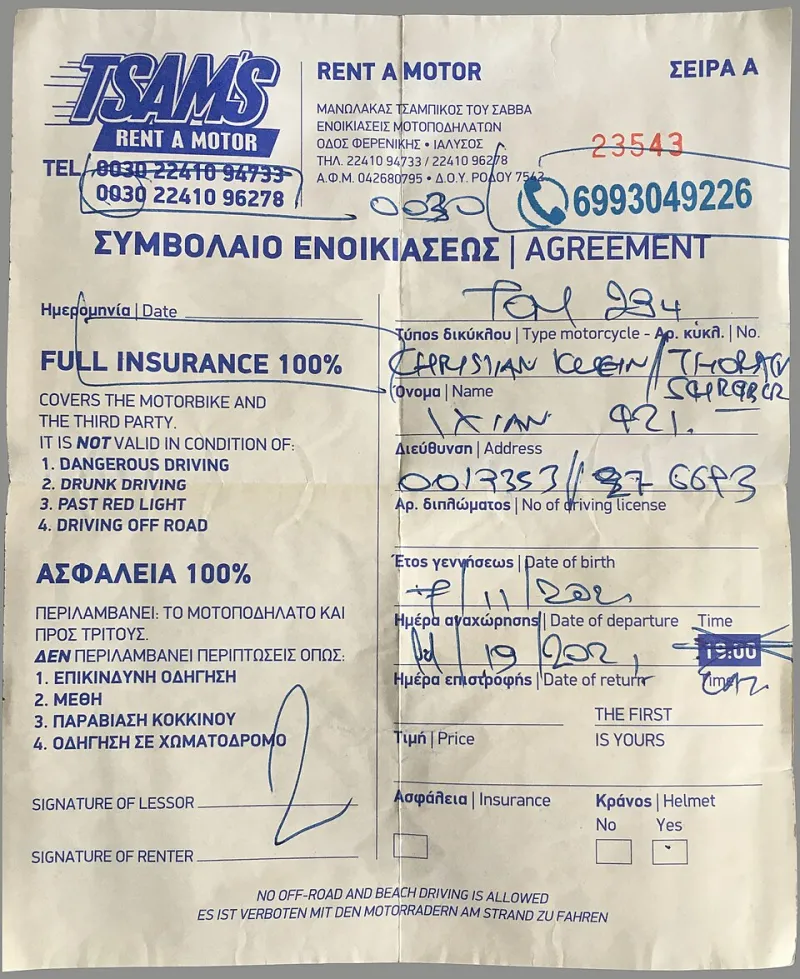
Photo: Pittigrilli, CC BY-SA 4.0, via Wikimedia Commons
In commercial practice, disputes rarely die in court. They expire in a diary. A supplier discovers a defect eleven months after the contractual notification window has closed; a buyer realises that an escalation timetable was a condition precedent to arbitration; a warranty claim is served on the last permissible day but to the wrong address. By the time counsel is instructed, the merits may be strong, the loss real, and the claim already barred. The clause that achieved that result is rarely the one the parties negotiated hardest over. It is usually a modest sentence buried in the notices provision.
Two Clocks, One Claim
English law imposes statutory limitation periods. For simple contracts, the Limitation Act 1980 generally allows six years from breach (twelve for deeds), subject to postponement rules for fraud, concealment and mistake. Contractual time bars operate separately: they can shorten, lengthen or replace statutory periods. They are creatures of contract, and their effect depends on drafting. A clause requiring notice 'within 30 days' may be a mere procedural step, or a condition precedent that extinguishes the right. Courts will not readily infer the latter; but clear words — 'as a condition precedent', 'strictly', 'time is of the essence', 'the Supplier shall have no liability unless' — will usually be given effect. The consequence is that a claimant may have a strong case under statute yet no claim under the contract.
The Anatomy of an Effective Time Bar
Good drafting does five things. First, it identifies the trigger with precision: is time running from the breach, from discovery, from the date a reasonable person ought to have known, from invoice, from practical completion, or from the date of a report? Second, it specifies the form and recipient of notice, and whether email suffices. Third, it defines the consequences of non-compliance unambiguously. Fourth, it provides for extensions and escalation. Fifth, it meshes with the dispute resolution clause so that a timely notice is not then defeated by a missed mediation or expert-determination step.
Notice provisions are construed strictly, but not pedantically. The courts distinguish between requirements going to substance and those going to form. A notice must be sufficiently clear to tell the recipient what is claimed and why; it need not be a pleading. But if the clause says 'in writing' and 'by recorded delivery', a telephone call will not do. If it says 'to the recipient's registered office', a copy to a project manager may be insufficient. The risk is acute where the clause is a condition precedent: substantial compliance may not rescue a defective notice.
Escalation Timetables and Condition Precedents
Multi-tiered dispute clauses — negotiation, escalation to senior executives, mediation, then arbitration — are common. They are also a fertile source of preliminary skirmishes. A party that commences arbitration before the timetable has expired may find itself stayed or, worse, met with an injunction. A party that treats the timetable as optional may discover the other side has complied and it has not.
Drafting should make clear which steps are mandatory, which are aspirational, and what happens if a party refuses to engage. A clause that says parties 'shall attempt to resolve' a dispute is usually not a condition precedent. A clause that says 'no arbitration shall be commenced unless' the steps have been completed is. For the latter, include a default mechanism: if the other party fails to respond within a stated period, the claimant may proceed. Otherwise, a recalcitrant respondent can stall indefinitely.
When the Clock Is Stopped: Standstill Agreements
Where limitation is imminent and negotiations are ongoing, a standstill or tolling agreement is the orthodox solution. In England and Wales, the parties can agree to suspend the running of time, often for a fixed period, extendable by notice. The agreement should record the claims covered (specifically, not 'all disputes arising'), the period of suspension, the date on which time resumes, the parties' agreement not to plead limitation during the standstill, and the basis on which costs are incurred. It should preserve rights and avoid any admission. It should also address confidentiality and privilege, and whether communications remain without prejudice.
A common error is to assume that a standstill extends statutory limitation automatically. It does not. It is a contract, and its scope will be construed strictly. Another error is to let the standstill expire without diarising the resumption date. A robust standstill has a short extension mechanism: if negotiations continue, the period automatically extends by, say, 30 days unless either party gives notice to terminate.
Challenging a Time Bar
Where a defendant relies on a time bar, the claimant may have several routes. The first is construction: the clause may not be a condition precedent, or the notice may have been given within time on its true meaning. The second is waiver or estoppel: if the defendant led the claimant to believe that late notice would be accepted, or consistently accepted late notices, it may be precluded from relying on the bar. The third is the prevention principle: a party cannot rely on a time bar where it has prevented compliance. The fourth is statutory control: in business-to-business contracts, the Unfair Contract Terms Act 1977 may apply to clauses that restrict liability, though time bars are not always treated as exemption clauses. The fifth is statutory postponement under the Limitation Act where fraud or concealment is alleged.
Each route is fact-sensitive and none is a substitute for complying with the clause. The safest course is to serve notice early, to the stipulated recipient, in the stipulated form, and to keep evidence of transmission.
Operational Discipline
Time bars are not solely a legal drafting issue. They are an operational one. Organisations should maintain a contract register that records notice periods, escalation deadlines and renewal dates. They should allocate ownership of each deadline to a named person, not a team inbox. They should test deemed-receipt provisions against their own systems: if the clause deems an email received at 9am on the next business day, a notice sent at 5pm on a Friday may be deemed served on Monday, which may be too late. They should train commercial teams to escalate potential claims at the first sign of trouble, not when the file is complete.
Conclusion
A time bar is a clause about risk, not merely about procedure. It can be a shield for the innocent party and a trap for the diligent but disorganised. In drafting, precision is everything; in performance, calendar discipline is everything. The cheapest dispute is the one that is preserved — and the most expensive is the one lost to a date.